
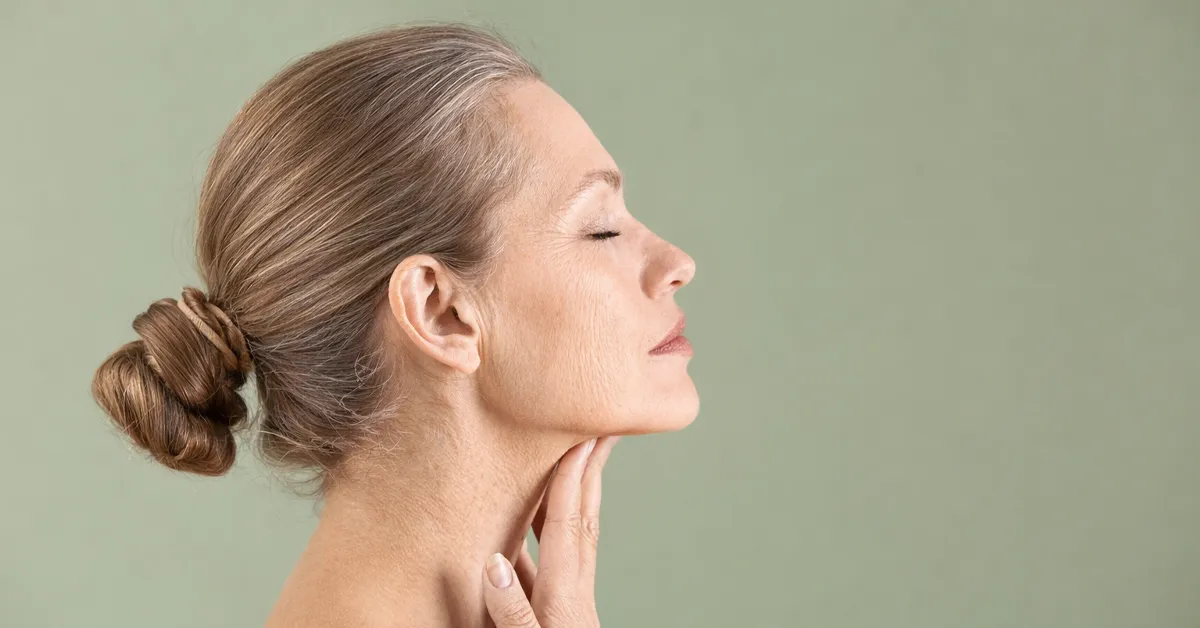
We are now living in a new era of restoration and rejuvenation surgery. Encouragingly, our priorities across both surgical and non-surgical facial treatments are returning to where they should have always been: maintaining and restoring facial health. Rather than masking ageing with volume alone, the focus has shifted to rebuilding the facial framework and improving the biology of the skin and soft tissues so they function better over time.
Thankfully, this shift has largely consigned the overfilled “pillow face” to the history books of facial aesthetic missteps.
Increasingly, patients are benefiting from a combined approach that restores both facial structure and biology. Modern facial rejuvenation now focuses on optimising skin quality and cellular function-supporting your cells and signalling pathways so that the skin maintains itself more effectively-while surgery addresses structural changes such as volume redistribution, descent of tissues (jowls and deep folds), and significant laxity of the neck.
Two patient groups in particular are benefiting from this integrated strategy.
The first are patients who have experienced significant weight loss. The GLP-1 revolution, driven by medications such as Ozempic and Mounjaro, has transformed metabolic health for many people, but it has also revealed a distinctive pattern of facial ageing. Rapid or substantial weight loss often leads to accelerated tissue descent in the face and neck, as well as loss of structural support.
Traditionally, many of these patients would have been treated with large volumes of dermal filler in an attempt to “re-inflate” the face. While this can restore fullness, it often alters facial identity and may not address the underlying structural changes.
Today’s more refined approach is different. Instead of adding volume indiscriminately, we combine biological optimisation-treatments that improve skin quality and cellular performance-with precise, natural surgical repositioning of facial tissues. The aim is not to change how someone looks, but to restore them to their freshest, healthiest version of themselves. Ideally, no one should be able to identify that surgery has taken place.
At our Facial Surgery Institute at The Beverley Hospital, this philosophy is central to how we treat patients. Surgeons, nurses, and skin therapists work together to design an individualised programme that restores facial structure while enhancing the biology of the skin and underlying tissues.
In Part 2, we will explore some of the confusing narratives that patients are hearing from different corners of the aesthetic industry. At times, non-surgical practitioners and surgeons present their approaches as competing alternatives, often out of concern for how evolving treatment trends may affect their practice models.
In reality, our experience shows the opposite. Surgical and biological treatments are not mutually exclusive-they are symbiotic. The most successful outcomes arise when both domains work together, because very few patients fall neatly into one category or the other.