Rhinoplasty, commonly known as a nose job, is a surgical procedure that reshapes the nose to improve its structure, function, or appearance. Patients seek rhinoplasty for a range of reasons, from a longstanding concern about the shape of their nose to breathing difficulties caused by structural issues.
Not every rhinoplasty is a first procedure. A significant number of patients come to Mr Saleh for revision rhinoplasty, correcting the results of an earlier nose job, whether performed by another surgeon or as an earlier procedure of his own. Revision cases require a different level of planning and expertise than a primary rhinoplasty, given the altered anatomy and scar tissue involved.
This guide covers what rhinoplasty and revision rhinoplasty involve, how they compare to non-surgical options, and what to expect if you’re considering either procedure.
About The Author: Daniel Saleh
Daniel Saleh is an internationally recognised, aesthetic and cosmetic surgeon renowned for his pioneering work in advanced facial, plastic, and cosmetic surgery.
Mr Saleh has built a reputation for precise, patient-first procedures, putting ethics before surgery. He exclusively provides recommendations after his expert assessment and discussion around your desired outcomes, for safety and satisfaction.
What Is Rhinoplasty?
Rhinoplasty is a surgical procedure that reshapes the bone and cartilage of the nose to change its size, shape, or proportions. It’s performed under general anaesthetic, with incisions typically placed inside the nose to keep the procedure discreet.
Depending on your anatomy, rhinoplasty can address the overall size of the nose, reduce a dorsal hump, refine the tip, or correct asymmetry.
Reshaping the nose often involves carefully breaking and repositioning the nasal bones, and a moulded cast is worn afterwards to hold the new shape in place while healing gets underway. The procedure typically takes between two and three hours and produces permanent results.
The surgeon may work through a closed (fully internal) or open (small external incision) approach depending on what needs correcting. We cover this choice in detail in our open vs closed rhinoplasty guide.
What Is Revision Rhinoplasty?
Revision rhinoplasty is a further procedure performed to correct or improve the outcome of a previous nose job. Patients seek revision surgery for a range of reasons: dissatisfaction with the aesthetic result, breathing difficulties introduced by the first procedure, or structural problems that have developed as scar tissue matures.
Revision cases are more technically demanding than a primary rhinoplasty. The surgeon works with altered anatomy and existing scar tissue, and often needs to graft cartilage from elsewhere, commonly the ear or rib, where the nose’s own supply has already been used. You don’t need to have had your first rhinoplasty with Mr Saleh to be considered for a revision.
Surgeons generally recommend waiting at least 12 months after a primary rhinoplasty before considering a revision, allowing swelling to settle and scar tissue to fully mature so the nose’s true result is clear.
Because of the added complexity, revision surgery typically takes longer and costs more than a primary procedure. In particularly complex cases, Mr Saleh works alongside a close ENT colleague to achieve the best outcome for the patient.
Because revision surgery usually needs direct, unobstructed access to altered cartilage and bone, it’s typically performed using an open technique. Our open vs closed rhinoplasty guide covers why that approach tends to suit complex and revision cases.
Rhinoplasty vs Non-Surgical Rhinoplasty: What’s the Difference?
Surgical Rhinoplasty
Surgical rhinoplasty is what most people mean by a ‘nose job’. It involves the physical alteration of the nose’s bone and cartilage structure and is performed under general anaesthetic, typically with incisions inside the nose.
This allows for changes to nose size, the removal or reduction of a dorsal hump, and reshaping of the nasal tip.
Non-Surgical Rhinoplasty
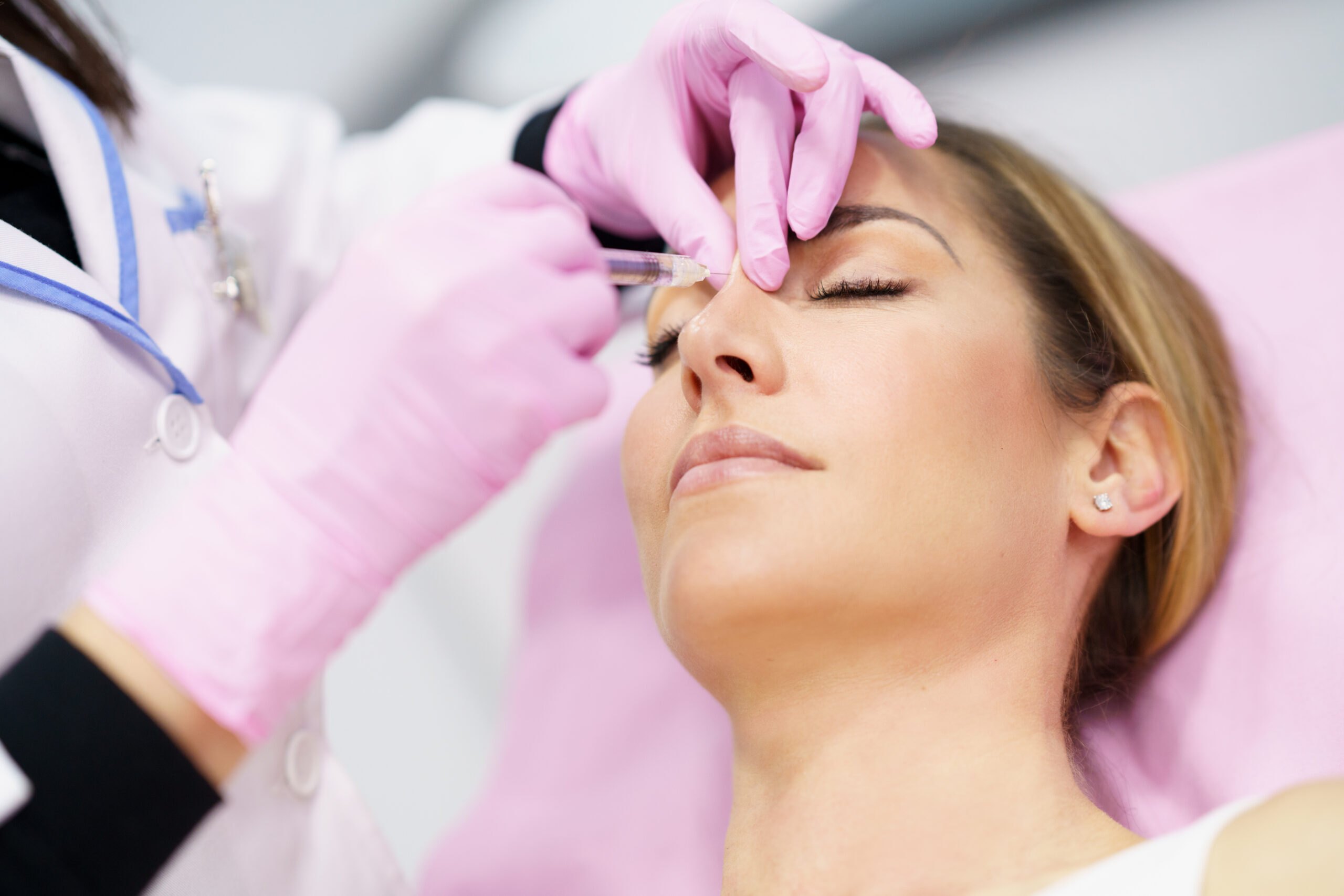
Non-surgical rhinoplasty, sometimes called a ‘liquid nose job’, uses dermal filler injected into the nose to temporarily change its appearance without surgery. Results typically last between 12 and 18 months and require repeat appointments to maintain.
Mr Saleh’s practice is focused on rhinoplasty and revision rhinoplasty. If non-surgical rhinoplasty is the right option for you, we’re happy to point you toward colleagues who specialise specifically in this treatment, so you’re seen by someone with dedicated expertise in it.
Rhinoplasty or Non-Surgical Rhinoplasty: Which Is Right for You?
If you’re looking for a permanent change to your nose’s structure, whether to address its appearance, correct a previous procedure, or improve breathing, surgical rhinoplasty is the appropriate option, and this is where Mr Saleh’s expertise lies.
If you’re chiefly interested in a temporary change, or want to trial a different nose shape before committing to surgery, non-surgical rhinoplasty may suit you better.
Nasal expertise with national and international reputation
As a pioneer in advanced facial cosmetic procedures, Daniel Saleh performs surgical rhinoplasty for patients from The Beverley Hospital in Newcastle.
Mr Saleh’s procedures are sought by patients from across the UK and the world for the precise, patient-focused, and natural-looking results of his procedures.
His process starts with a discussion and expert assessment to explore your desired outcomes and specific needs, so you only receive procedures that are safe, realistic, and matched to your goals.
As featured on Channel 4, BBC Radio 4, and The Guardian – if you’re interested in a surgical rhinoplasty procedure, book a consultation or speak to our team today for more information.