
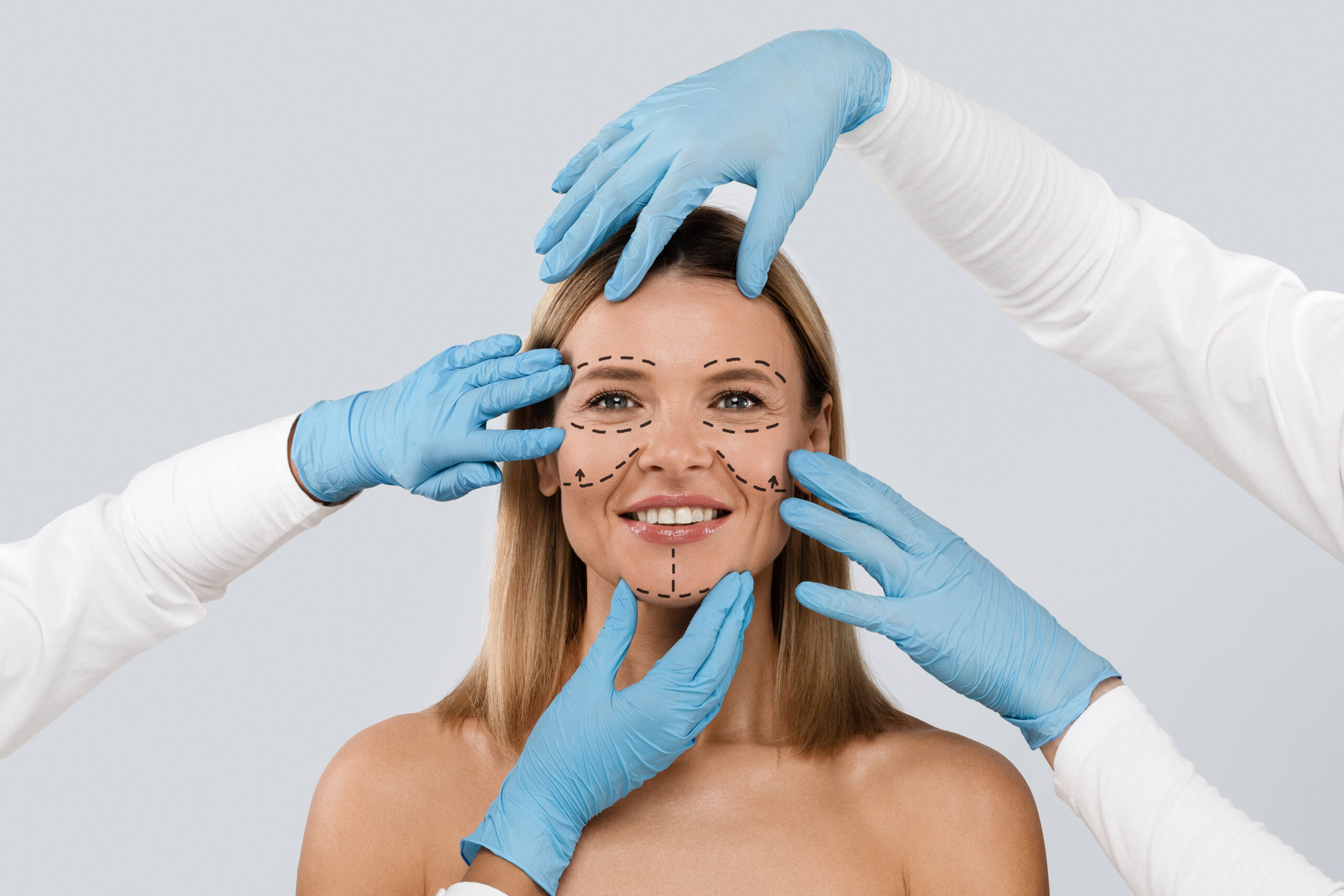
If you’ve started to notice early signs of ageing around your jawline or jowls, you may have come across the term mini facelift. But what is a mini facelift, and is it the right option for you?
A mini facelift is a less invasive alternative to a traditional facelift, designed to subtly lift and tighten the lower face. It’s ideal for those who want natural-looking results without the downtime or extent of a full face and neck lift.
In this guide, we’ll explain exactly what a mini facelift involves, who it’s suitable for, the benefits, the recovery process, and what to expect.
What Is a Mini Facelift?
A mini facelift focuses on the lower third of the face, particularly the jawline and jowls. It works by repositioning underlying tissues and removing a small amount of excess skin to create a smoother and more defined appearance.
Unlike a full facelift, which addresses deeper ageing across the face and neck, a mini facelift is more targeted. It typically uses shorter incisions around the ears, making it a less invasive procedure with more subtle results.
For many patients asking what is a mini facelift, the key appeal is that it offers noticeable improvement without looking overdone.
What Happens During the Procedure?
A mini facelift is usually performed under local anaesthetic, sometimes with sedation. The procedure typically involves:
- Small, carefully placed incisions around the ears
- Tightening and repositioning of the underlying facial tissues
- Removal of excess skin
- Closing the incisions with minimal, discreet scarring
Because the approach is more conservative than a full facelift, the focus is on refinement rather than dramatic change.
Mini Facelift vs Full Facelift
Understanding the difference between a mini facelift and a full facelift is key when deciding which procedure is right for you, as each is designed to treat different stages of ageing.
A mini facelift is best suited to early signs of ageing, such as mild sagging, softening of the jawline, and the development of early jowls. It focuses on the lower face using shorter incisions around the ears, making it a less invasive option with a quicker recovery and more subtle and natural-looking results.
A full facelift, on the other hand, is designed for more advanced ageing. It addresses deeper structural changes across both the face and neck, including significant skin laxity, deeper folds, and loss of definition. This procedure typically involves more extensive tissue repositioning, resulting in a more comprehensive and longer-lasting outcome.
If your main concern is the neck, more pronounced sagging, or deeper signs of ageing, a full facelift may be more appropriate. However, for those looking to refresh the lower face without undergoing a more extensive procedure, a mini facelift can be an excellent option.
Benefits of a Mini Facelift
For the right candidate, a mini facelift offers a range of meaningful yet natural improvements to the lower face:
- A more defined, sculpted jawline
- Reduction in early jowls and mild skin laxity
- Subtle lifting of sagging tissue without an overdone look
- Smaller, discreet scars typically hidden around the ears
- A shorter recovery period compared to a full facelift
- A less invasive approach with reduced overall downtime
One of the key advantages of a mini facelift is its ability to deliver noticeable rejuvenation while maintaining your natural facial character. Rather than dramatically altering your appearance, it refines and restores, helping you look fresher and ready for the day ahead.
Who Is a Mini Facelift Suitable For?
Suitability for a mini facelift depends on your individual anatomy, skin quality, and aesthetic goals, but it is generally best suited to:
- Patients experiencing early signs of ageing
- Mild to moderate skin laxity around the jawline and lower face
- Good skin elasticity, which allows for smoother, more natural results
- Those looking for subtle rejuvenation rather than a dramatic change
- Patients not yet requiring a full face and neck lift
A mini facelift is particularly effective for individuals who want to restore definition to the jawline without undergoing a more extensive procedure.
It is less suitable if you have significant neck sagging, heavier skin laxity, or more advanced ageing, as a mini facelift has limited impact in these areas. In these cases, a full facelift or combined approach may deliver more appropriate results.
Recovery and Aftercare
Recovery from a mini facelift is typically quicker and more manageable than a full facelift, but it’s still important to allow your body the time it needs to heal properly and to follow the recommended aftercare closely.
In the first one to two weeks, it’s common to experience swelling and bruising, which gradually improves as the initial healing phase progresses. Stitches are usually removed within 7 to 14 days, and most patients feel comfortable returning to work and normal day-to-day activities within two to three weeks. While the majority of visible recovery happens within the first few weeks, results continue to refine over several months as any residual swelling settles.
You may notice some tightness, mild discomfort, or numbness in the treated area early on, but these sensations typically ease as healing continues.
Risks and Considerations
As with any surgical procedure, a mini facelift carries some risks, although these are significantly reduced when performed by an experienced and qualified surgeon.
Common risks include temporary bruising and swelling, as well as scarring, which is usually minimal and carefully concealed around the natural contours of the ears. There is also a possibility of infection, minor asymmetry, or changes in sensation, such as numbness. In rare cases, nerve-related complications may occur, although these are uncommon.
There is also a small risk of issues such as bleeding or delayed healing, particularly in patients who smoke or have underlying medical conditions that may affect recovery.
Cost of a Mini Facelift in the UK
The cost of a mini facelift in the UK can vary depending on several factors, including the complexity of your procedure, the technique used, and the experience of your surgeon.
As a general guide, mini facelift procedures typically start from around £5,000–£8,000, with more advanced or bespoke approaches costing more. It’s important to understand that pricing is not just about the procedure itself, it often includes your full surgical journey, such as your consultation, theatre fees, anaesthesia, aftercare, and follow-up appointments.
Several key factors can influence the final cost:
- Extent of correction required – Patients with more noticeable skin laxity may require a more advanced approach
- Surgical technique – Different lifting techniques can impact both the complexity and duration of surgery
- Anaesthesia type – Local anaesthetic procedures may differ in cost compared to those requiring sedation or general anaesthetic
- Surgeon expertise – Highly experienced, specialist surgeons may command higher fees, reflecting their skill and results
While it can be tempting to choose based on price alone, it’s essential to prioritise safety, experience, and natural-looking outcomes.
Alternatives to a Mini Facelift
If you’re not ready to consider surgery, there are several non-surgical treatments that can provide subtle, temporary improvements to the lower face.
Common alternatives include:
- Dermal fillers – Used to restore lost volume and improve contour around the jawline and cheeks
- Anti-wrinkle injections – Help soften dynamic lines and reduce muscle activity contributing to sagging
- Skin tightening treatments – Technologies such as radiofrequency or ultrasound can stimulate collagen and mildly tighten the skin
These treatments can be effective for early signs of ageing and are often used as part of a preventative or maintenance approach.
However, it’s important to set realistic expectations. Non-surgical treatments do not reposition underlying facial structures or remove excess skin, meaning they cannot replicate the lifting effect or longevity of a surgical procedure.
For patients with more defined jowling or skin laxity, a mini facelift remains the most effective way to achieve a noticeable and longer-lasting improvement.
Book a Consultation Today
If you’re considering your options and want to understand what a mini facelift is in the context of your own face, the next step is a personalised consultation. Every face ages differently, and the most effective treatment is one that is tailored to your anatomy and skin quality.
During your consultation, you’ll receive a detailed assessment, clear recommendations, and honest advice on whether a mini facelift, or a more comprehensive approach, is right for you.
Mr Daniel Saleh is an award-winning face lift surgeon that specialises in natural-looking facial rejuvenation, combining advanced surgical techniques with a patient-first approach. Book your consultation today to take the first step towards a more refreshed appearance