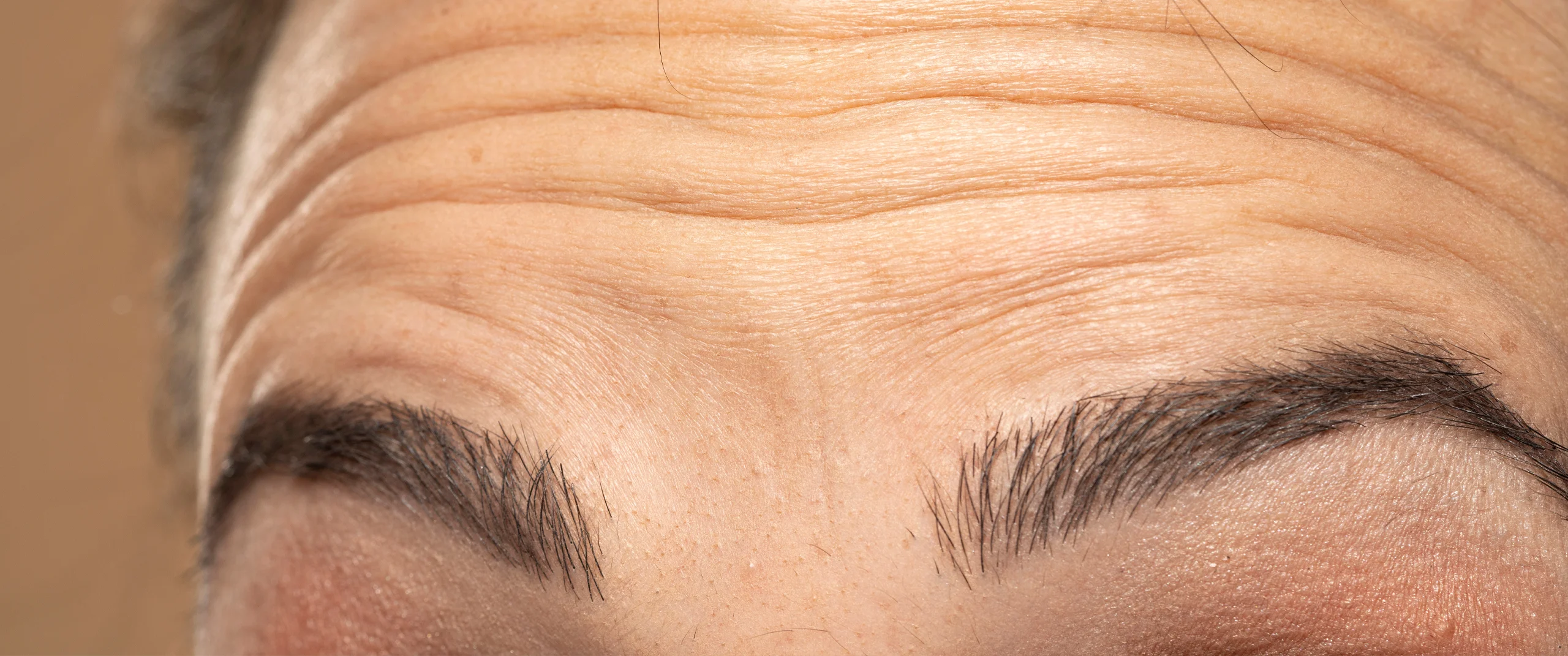
A heavy and tired-looking upper face is usually blamed on the eyelids. Often, the actual cause is the eyebrow itself sitting lower than it used to.
Telling these two problems apart matters, because it determines whether the right procedure is a brow lift, upper eyelid surgery, or both, and that distinction is also what drives the cost.
Expert surgeon Daniel Saleh’s guide explains what a brow lift is, how it differs from eyelid surgery, what it involves, and what it costs in the UK.
What Is a Brow Lift?
A brow lift is a surgical procedure that raises the position of the eyebrow. It corrects brow ptosis, the medical term for descent of the eyebrow from its normal anatomical position, which the NCBI StatPearls reference on brow ptosis defines as a point where the eyebrow’s position becomes heavy, and/or begins to obstruct the visual field.
In most cases, this is age-related: the tissue supporting the brow loses projection and elasticity over time, and the brow settles lower on the forehead. The bony structure can also encourage this and there are inherent differences between the male and female brow shape and contour. The brow is best thought of as only a small part of the forehead – and often the forehead in general has a big role to play.
This is a different problem to excess skin on the upper eyelid itself, known as dermatochalasis, which is corrected with upper blepharoplasty rather than a brow lift. The two are frequently confused because they produce a similar visual result: a heavy, hooded upper eyelid. Examination by an expert is key.
- Brow lift Forehead lift: Raises the eyebrow / forehead itself, addressing brow ptosis.
- Upper blepharoplasty: Removes excess skin from the upper eyelid, addressing dermatochalasis and other disorders of the eyelid.
- Lower blepharoplasty: A separate procedure addressing heavy bags and loose skin in the lower eyelid, which can affect both function and appearance but is not caused by brow position.
Many patients have some degree of both brow descent and eyelid skin excess, in which case the two procedures can often be planned together.
BROW LIFT VS BLEPHAROPLASTY: HOW TO TELL WHICH YOU NEED
The distinction between brow lift vs. blepharoplasty comes down to where the problem actually sits. If the eyebrow itself has dropped, typically visible as the brow sitting at or below the bony ridge of the eye socket, the issue is brow ptosis.
If the brow is still sitting in a normal position but the eyelid skin above the lash line has become loose and overhanging, the issue is most likely dermatochalasis.
In practice, most people cannot reliably tell the two apart by looking in a mirror, because a low brow pushes down on the eyelid skin above it and can look identical to genuine eyelid excess. This is why an in-person assessment, rather than a self-diagnosis, is the accurate way to establish which procedure, or combination of procedures, is appropriate.
How Much Does a Brow Lift Cost in the UK?
Brow lift pricing in the UK typically ranges from around £3,000 to £9,000 or more, but this is dependent on the technique used and whether the procedure is combined with eyelid surgery. The guide price for a standalone brow lift with Mr Saleh starts from £5,000.
This figure is a starting guide, not a fixed quote. Your final price is confirmed after an in-person consultation, once your surgeon has assessed the degree and pattern of your brow descent and agreed the right technique with you.
Our related guide on the cost of facial surgery covers how pricing works across facial procedures more broadly.
Several factors account for most of the variation in price between patients and between clinics:
| Cost driver | Why it affects price |
| Technique used | A temporal release brow lift involves a more extensive dissection than a trans-palpebral browpexy, which affects surgical time, risk and type of anaesthetic required. |
| Combined procedures | Performing a brow lift alongside upper or lower eyelid surgery increases both surgical time and overall cost |
| Degree of correction needed | Correcting significant asymmetry or more pronounced descent typically requires more extensive surgical planning |
| Surgeon experience | Surgeons with a higher volume of brow and eyelid procedures often reflect that experience in their fees |
IS A BROW LIFT A BROW LIFT AVAILABLE ON THE NHS?
Cosmetic brow lift surgery to correct age-related sagging is not typically funded by the NHS. Where brow descent is severe enough to genuinely obstruct the visual field rather or if there is paralysis of the muscles controlled the forehead, NHS treatment is definitely possible, but this is the exception rather than the rule and is something to raise directly at consultation rather than assume in advance.
How Is a Brow Lift Performed?
The technique used depends on where the brow has dropped and whether eyelid surgery is being carried out at the same time. Two approaches are most commonly used.
| Technique | How it works | Best suited for |
| Temporal (release) brow lift AKA borw reset | A small incision is made in the hairline at the temple, through which the brow tissue is released and repositioned | Outer brow droop, which is the most common pattern of brow descent, often used together with facelifts |
| Endoscopic forehead browlift | Upto 4 small incisions in the hair line allow a small camera to be inserted to release oaal the forehead and brow tissue from the underlying bones and muscles to allow repoisitoning higher on the scalp | Significant brow problems, not just affecting the tail of the brow, often combined with patients having endoscopic facelifts |
| Trans-palpebral browpexy | The brow is lifted through the same incision used for upper eyelid surgery, in the upper lid crease | Patients having combined brow and upper eyelid surgery |
| Gliding brow lift | A small incision in the temporal hairline and the skin is released and then re-posiitoned and held in place with external sutures on the skin – it looks odd for a few days intil the external sutures are removed – but can be effective in niche situations | Significant loose skin, precious failure of alternate methods, patients who will not entertain more involved procedures but want some improvement |
A temporal brow lift is used most often in practice, because outer brow drooping is the most common pattern of age-related descent.
Trans-palpebral browpexy is generally reserved for patients who are already having upper eyelid surgery, since it uses the same incision rather than adding a separate one.
Brow lift surgery is typically performed as a day case under general anaesthetic, meaning most patients go home the same day, with the procedure itself taking around one to two hours.
What Results Can You Expect?
A successful brow lift restores the brow to a more functional position, and reduces the heaviness that develops when the brow presses down on the upper eyelid, this often can improve tension headache symptoms associated with heavy brows. Because everyone has some natural asymmetry between their left and right brow, surgery can often improve overall symmetry as well as raise brow position.
Patients who have relied on raising their eyebrows or engaging their forehead muscles to compensate for a low brow, sometimes without realising they were doing it, often notice that forehead lines soften once that compensation is no longer needed.
How Long Does a Brow Lift Last & What Is Recovery Like?
A surgical brow lift repositions the underlying tissue rather than relying on temporary support, so results are considerably longer-lasting than non-surgical options such as Botox or thread lifts, which typically need repeating every few months.
Natural ageing continues after any brow lift, and the degree to which results hold over time varies from patient to patient, and ultimately gravity always wins.
Recovery follows a fairly predictable pattern:
| Surgery time | 1 to 2 hours |
| Hospital stay | Day case |
| Downtime | Around 1 week |
| Return to work | 7 to 14 days |
| Back to gym | 6 weeks |
Bruising and swelling around the forehead and upper eyelid area are normal in the first week and settle progressively. Most patients feel comfortable resuming light daily activity within a week to ten days, though strenuous exercise should wait for six weeks.
Is a Brow Lift Right for You?
A brow lift is generally most suitable where the eyebrow itself has genuinely dropped, whether that shows up as a heavy and tired appearance or, less commonly, as a mild effect on the upper visual field.
If the brow is sitting in a normal position and the concern is loose upper eyelid skin instead, blepharoplasty alone may be the more appropriate procedure. If both are present, they are often planned together.
The right answer depends on an assessment of where the brow and eyelid actually sit relative to each other, which is why a consultation, rather than a mirror, is the accurate way to establish what applies to you.
Why Choose Daniel Saleh for Your Brow Lift
Getting the brow lift versus blepharoplasty distinction right depends on assessing the eyelid and brow as one connected system, the core focus of oculoplastic and facial surgery training.
Mr Saleh has specialised in brow lift and eyelid surgery for most of his 16-year career, including one of only three national scholarships awarded for advanced cosmetic surgery education across the UK and USA.
Book a Consultation
If you’re considering a brow lift, the most useful next step is a no-obligation consultation, where the position of your brow and eyelids can be properly assessed rather than judged from a mirror. This is also the point at which your exact procedure is confirmed and you will be equipped with the information to make a personal decision on what you prefer.
Read more on the main brow lift page.